Category
Bardia Sanat Company
Phone Number: +98 21 91003027-9
Mobile Number: +98 912 154 1843
Address: Nelson Mandela Street, Shahid Mohammad Ali Rahimi Alley, No. 54, Unit 1
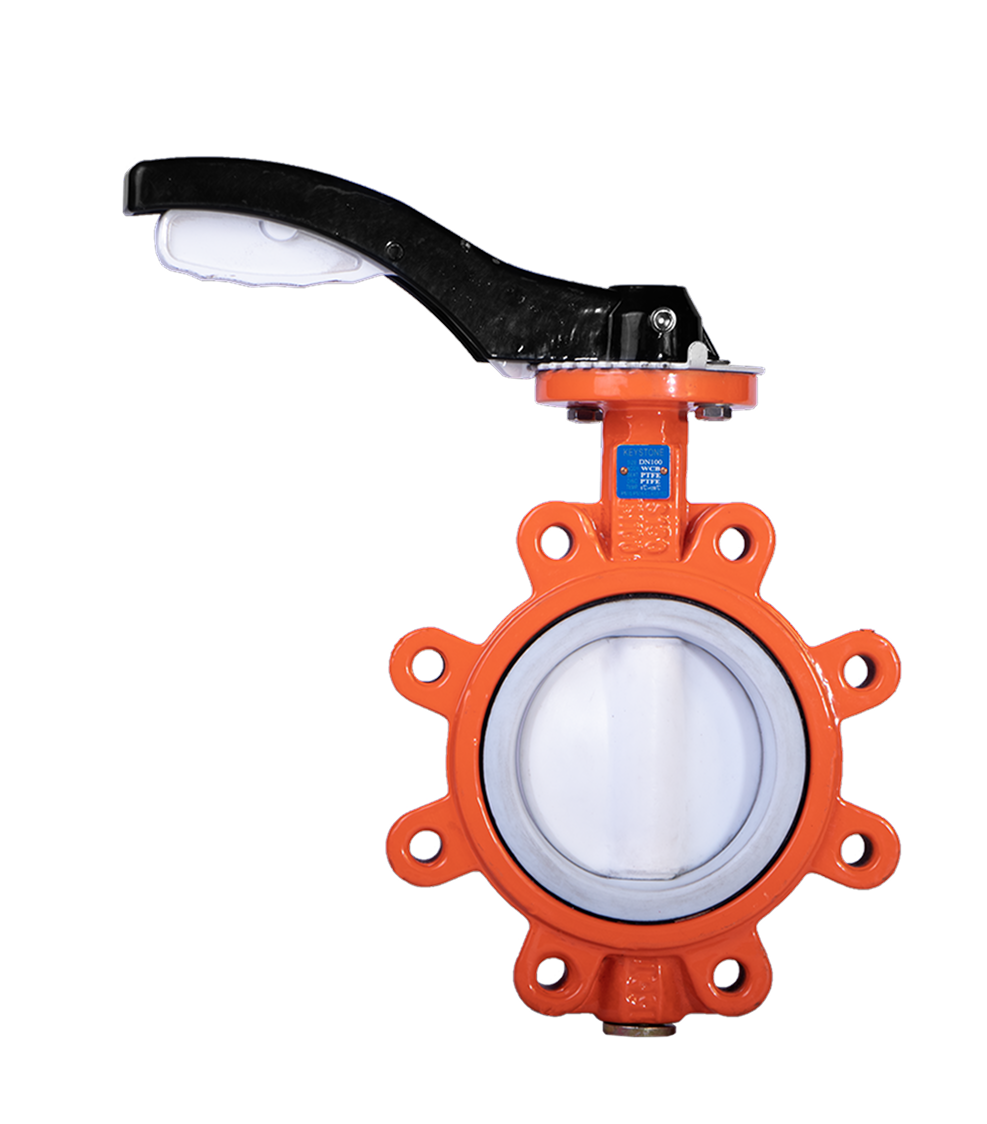
Full Introduction and Structure Review of A216 Carbon Steel Flanged Check Valve
1. What is an A216 Carbon Steel Flanged Check Valve?
The flanged check valve (Flanged Check Valve – A216 Carbon Steel) is one of the most widely used types of check valves in heavy industries. This valve is manufactured according to the ASTM A216 standard, which is specifically designed for cast carbon steel suitable for high-temperature and high-pressure applications. Its primary function is to prevent backflow in lines carrying steam, hot water, mildly corrosive fluids, gases, and various industrial processes.
Thanks to its flanged design, this type of valve is an ideal choice for large piping systems, high-pressure environments, and sensitive operational conditions.
2. What is the A216 Steel Standard and Why is it Suitable for Check Valves?
The ASTM A216 standard defines cast carbon steels for high-temperature and high-pressure service. Common grades include:
-
WCB → Suitable for normal temperatures up to 425°C
-
WCC → Suitable for cold environments
-
LCB/LCC → Suitable for cryogenic service
Reasons for choosing A216:
-
Excellent resistance to high pressure
-
Castability for producing strong, integral bodies
-
Ability to withstand high temperatures and thermal shocks
-
High durability in heavy industrial environments
For these reasons, most industrial steel check valves are made from A216 WCB, offering the best balance of strength, cost, and performance.
3. Structure of the A216 Carbon Steel Flanged Check Valve
This valve is usually manufactured in one of three types:
-
Swing Check Valve (swing type)
-
Dual Plate Check Valve (dual-plate type)
-
Lift Check Valve (piston type)
The most common type is the swing check valve.
Main Components:
-
Body: Made of A216 WCB steel
-
Disc (Flap): Stainless steel (commonly 304 or 316 for higher resistance)
-
Hinge Pin: Stainless steel or nickel alloy
-
Gasket and Sealing Ring: Metal, graphite, or PTFE
-
Bonnet / Cover: Bolted design
4. Operating Mechanism of the Flanged Check Valve
This valve operates completely automatically and does not require an operator.
-
Forward flow → Disc opens
-
Flow reduction or reverse flow → Disc closes
The line pressure itself is the driving force for opening and closing (no mechanical actuation needed). This design prevents backflow and protects pumps, boilers, compressors, and other process equipment.
5. Applications of the A216 Carbon Steel Flanged Check Valve
Due to its high-pressure and high-temperature tolerance, this valve is widely used in industries such as:
-
Refineries
-
Petrochemicals
-
Steam power plants
-
Oil & gas
-
Oil transportation pipelines
-
Boilers and steam systems
-
High-pressure water and wastewater
-
Steel and mining industries
-
Chemical industries
In particular, steel A216 valves are essential in saturated and superheated steam lines.
6. Advantages Compared to Other Types of Check Valves
-
High mechanical strength: The cast steel body of A216 increases durability and pressure resistance.
-
Excellent temperature tolerance: Operates up to 400–450°C without quality loss.
-
Availability for all industrial sizes: From 2 inches up to 48 inches or more.
-
Standard flanged connection (ANSI/ASME): Class 150, 300, 600, 900+, allowing safe and durable pipeline connections.
-
Easy maintenance: Bolted bonnet design allows straightforward servicing.
7. Types of Seats in A216 Steel Check Valves
-
Metal-to-Metal: For high-temperature steam services.
-
Soft Seat (NBR / EPDM / PTFE): For lower-pressure fluids or complete sealing.
In steam systems, metal-to-metal seats are usually recommended.
8. Important Points When Purchasing an A216 Flanged Check Valve
-
Fluid type: Steam, gas, hot water, oil? This determines disc and seat selection.
-
System pressure (PN/Class): For high pressures, Class 300+ is recommended.
-
Operating temperature: For temperatures above 300°C, metal seats are preferred.
-
Valve type:
-
Swing → Suitable for low-velocity flows
-
Lift → Suitable for high-pressure flows
-
Dual Plate → Compact, lightweight, and economical
-
-
Disc material: Preferably stainless steel 316 for longer service life.
9. Conclusion
The A216 carbon steel flanged check valve is a powerful, reliable, and industrial solution to prevent backflow in high-pressure and high-temperature systems. With its robust cast steel construction, durable sealing, and standard flanged connection, it is one of the best choices for oil, gas, steam, and refinery industries.
.png)